Tag: Jesus

  • Narrowed Ways

    Narrowed Ways

    Read: Matthew 7

    Focus

    ‌“Enter through the narrow gate, for the gate is wide and the road is easy that leads to destruction, and there are many who take it. For the gate is narrow and the road is hard that leads to life, and there are few who find it.” —Matthew 7:13-14 (NRSVue)

    Devotion

    ‌Depending on the publisher (including online ones), much of Matthew 7 is broken into sections. This is instead of the long speech that it is (including the chapters themselves). Our focus verse (similar to Luke 13:23-30) is often popped out all on its own, leading us to conclude that it stands alone.

    ‌This chapter is part of Jesus’ Sermon on the Mount. The Sermon on the Mount remains challenging to this day. As such, there are not sections that one can tear out separately from the rest.

    ‌All too often, the focus verses become solely about doing the right thing and living the right life. I’ve heard sermons preached, and I’ve preached them. However, when we put the focus passage in its context (within the Sermon on the Mount), it gets a bit harder (even arguably impossible) to think that way.

    ‌If we look at just the verse before:

    “In everything do to others as you would have them do to you, for this is the Law and the Prophets.”

    Matthew 7:12 (NRSVue)

    ‌…and the verse after:

    “Beware of false prophets, who come to you in sheep’s clothing but inwardly are ravenous wolves.”

    Matthew 7:15 (NRSVue)

    …perhaps our perspective would change.

    ‌What if, instead of being a standalone set of verses about narrow gates and hard roads, they were the transition verses between treating others as you’d have them treat you and looking out for false prophets?

    ‌Many of us have inherited a high view of the Scriptures (which we, I believe, should have). However, a high view of the Scriptures is, in many circles, a rigid view of the Scriptures, which does not allow for setting aside of traditions, such as looking at the narrow gate and hard road verses in isolation from the rest of Jesus’ words that Matthew has happening during a single event.

    Reflection

    ‌In our expanded context of Matthew 7:12-15, we are presented with the Law, the prophets, and the false prophets. How might verse 12 impact your understanding of verse 15, when taken together? How does this affect your thinking about verses 13–14?

    Act

    ‌As you read the Scriptures, remember that while the Books are valid separations, chapters (except for the Psalms and Proverbs) and verses are not the original way the Scriptures were presented. Instead of defaulting to chapter, verse, and heading, read the words, and see what that does to change how you read and what you read.

    ‌???? Prayer

    ‌Jesus, you have the Word of eternal life. Let us remember with honor and dignity that through you all of Creation was made, that words do mean much, especially yours. Holy Spirit, guide our reading of the Scriptures that we are transformed from the inside out. God, forgive us when the tools that we deem to help us, interfere with what you have to say to us today. Amen.

  • Our Blindings

    Our Blindings

    Read: Luke 13:23-30

    ‌‌‌????Focus

    “For human ways are under the eyes of the Lord, and he examines all their paths.”

    Proverbs 5:21 (NRSVue)

    Devotion

    ‌When you read the passage (Luke 13:23-30), what did you focus on? Did you focus on Jesus’ command to enter the narrow door? Did you focus on its narrowness?

    ‌While Jesus’ answer is very important, you’ll note he didn’t actually answer the question, at least in any way that is definitive.

    ‌“Lord, will only a few be saved?” (Luke 13:23 NRSVue)

    ‌What if the issue is the question itself?

    ‌“There are no right answers to wrong questions.”

    Ursula K. Le Guin

    If you don’t ask the right questions, you don’t get the right answers.

    Edward Hodnett

    ‌How did you read the question in the passage? Is the asker wanting to know who gets in and who is kept out (exclusionary)? Or is the asker wanting to know if they can even make it?

    ‌Our reading of the question helps us define the answer, thus understanding how we see the question is important. Is it a question of rule or a question of grace?‌

    Another possible view is the end goal of the asker. Is this about seeking the best way, the sure way (what can I get away with), or a different way?‌

    What if Jesus’ long answer was less about rules and such, but instead about focus? Are you focusing on Jesus (God) and God’s ways, or are you focusing on the behaviors of others?

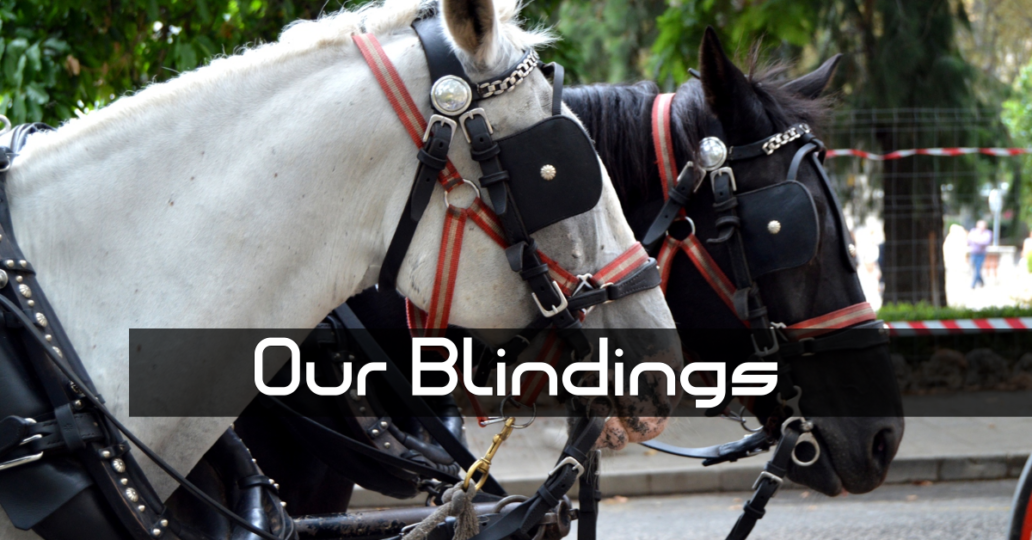
    ‌What if the narrow way is more like a horse wearing blinders? A horse that wears blinders is doing so because their rider or driver is seeking to keep them from being distracted from everything around them, and wanting the horse to focus on what’s ahead, and on the rider (driver).

    Reflection

    ‌When you first read the passage, what was your focus on? Has your focus changed at all? Do you ever find yourself watching others more than you are watching and seeking God?

    Act

    ‌Find one small and simple thing can you remove from your life to narrow your focus on God.

    ‌???? Prayer

    Help us to look ahead to you, Lord God, and not look side to side at others. Amen.

  • People Past

    People Past

    ‌Read: Psalm 25; Isaiah 25:6-9; Philippians 3:20-21; John 6:37-40

    Focus

    ‌“This is indeed the will of my Father, that all who see the Son and believe in him may have eternal life, and I will raise them up on the last day.”

    John 6:40 (NRSVue)

    Those who have died, that have been a direct part of our lives, they still live. Our hearts and memories hold them close (or far). Their good and bad helped shape us, for good and bad.

    Devotion

    Today is All Souls Day. The day that is also termed as the Commemoration of the Faithful Departed. However, even those who do not believe that Jesus is Lord and Savior have had an impact on those of us who do so believe. It might be a stretch to want to take a church tradition and expand it, but the truth is that many of us have that person who is gone, who we miss.

    ‌They may have not been a believer. They may have been baptized as infants or children, but were either not raised in the faith, or lapsed. Depending, of course, on one’s tradition/theology, that baptism may or may not seal them to Christ. Ultimately, it isn’t up to us.

    ‌This is a little personal, I suppose. My stepfather died a number of years ago (my mom has since remarried to a good man). I realized all the conversations we didn’t have, and they are a source of regret. I remember learning that my stepfather had been baptized as a child. That was news to me. I learned it as he was being lowered into his grave.

    ‌Then I looked at his library. He was an avid reader. He read far more broadly than I ever have. What shocked me was the books about the Bible and religion. As an English teacher, they shouldn’t have surprised me. They were read. They had not been ignored or put on a shelf and forgotten (like many of my books), though they may have not been read in quite some time. Who knows where is heart really was with Christ? I could assume. I do hope.

    ‌Did my stepfather and I have issues? Of course! Yet, he still formed me. It is not unreasonable to grieve that he is gone. He was long part of my life. There is a hole where he was. My mom, dad, stepmom have their own places in my life, so this is not exclusionary, which is also important. No person can ever take the place of another.

    ‌Another can help you heal from the damage of bad history (including abuse), but they cannot replace someone else.

    ‌Perhaps today ought to be the day we set aside in our calendar to remember, mourn, celebrate, reflect, upon the lives of others and how they touched us. If you’re reading this, you are likely a believer in Jesus Christ. As such, we who believe also call Jesus the Redeemer. We can take solace, hope, and joy in that. Jesus can redeem both the joys and pains in regard to those who have touched our lives.

    ‌May it be so.

    Reflection

    ‌Which deceased person has affected your walk with Christ (for good or bad)? How did they affect your walk? How do you imagine their life through the eyes of Jesus?

    Act

    ‌Ask another person who the most impactful deceased person has been in their life, and share yours. As you talk together, where can you see the redemptive power of Jesus?

    ‌???? Prayer

    ‌God, you have place people in our lives to help guide us into your ways. Some of them have been undisguised blessings, some are so through the redemptive power of your Son. Holy Spirit, guide our hearts and thoughts to see the power and influence of others in our lives. Amen.

  • Walking With Saints

    Walking With Saints

    Read: Psalm 34:1–10, 22; 1 John 3:1-3; Revelation 7:9-17; Matthew 5:1-12

    Focus

    ‌After this I looked, and there was a great multitude that no one could count, from every nation, from all tribes and peoples and languages, standing before the throne and before the Lamb, robed in white, with palm branches in their hands.

    Revelation 7:9 (NRSVue)

    ‌Saints are often viewed as legendary characters, with lives almost impossible to duplicate. Many of those same Saints looked at themselves and saw nothing but their own flaws. They pursued purity (or holiness) to the degree we often pursue wealth, accolades, status, and self-esteem. As Western Christianity wonders what its place is in the current context, perhaps the Saints can advise us.

    ‌‌✟Devotion

    ‌Western Christianity is in turmoil. The so-called Progressive wing seems to find new things to toss out, while the so-called Conservative (or Reactionary) wing finds new restrictions to add. So many things have been tied to what it means to be a so-called real Christian that everyday Christians can find it hard to find stability in the one place that had been stable for generations.

    ‌While certain traditions regularly hold certain Saints highly, many regular church members don’t know them, or their traditions, denomination, or local church just ignore the Saints. This, sadly, even includes many of the churches that have been named after Saints.

    ‌This is not about the veneration of Saints (which most Western Protestants struggle with), but looking to the examples of the people whose lives were recognized by others (rather than self-promotion) as reflecting aspects of Jesus Christ.

    ‌Even Protestants have Saints, though they’d probably never call them such. My tradition, the Church of the Nazarene, had strong ties with Methodism, which was founded by John and Charles Wesley. The Wesleys are often spoken of in the same ways as other traditions speak of the Saints. The Church of the Nazarene has long held Phineas Bresee up, too, in almost the same ways as the Saints. Yet, neither the Wesleys nor Bresee were flawless. For the broader US church, Hudson Taylor is read and spoken of in similar ways.

    ‌As we look back on Bresee, the Wesleys, or Taylor we often focus on their flaws, especially in regard to where their cultural sensitivities do not match ours. Yet, these men do indeed provide valuable insight into living lives as faithful followers of Jesus.

    ‌One of the advantages of the Saints is that while we are usually provided glimpses into their lives through overly optimistic lenses, their stories are still ones of encouragement. Many of them became Saints, not through some huge single life event, but walking step-by-step to become more like Jesus. This is especially true when the saints our outside our personal tradition; this might be the most important thing.

    ‌You’ll note that I mentioned 4 men. Inside Protestant tradition, there is an extreme emphasis on men. Many of the Saints were women. In the Church of the Nazarene, we have Mildred Wynkoop (a huge presence in holiness theology), who we should have feelings for as the Wesleys, and perhaps more so than Bresee. I’m not calling her, the Wesleys, Bresee, or Taylor, Saints, and, yet, they are towering presences of Christian history which sort of makes them Saints.

    ‌While certain traditions have miracles assigned to Saints, that hasn’t always been the case. In fact, many of the Saints were so-called Doctors of the Church, meaning that their writings profoundly shaped theology and/or Christian living. Some were bishops. Some were abbots/abbesses. Some were monks/nuns. Some were teachers. There were even a couple of lawyers in there.

    ‌What makes a Saint? THAT is a very good question. Some traditions use miracles as the divider for canonized saints, at least in more recent era. Yet, there have been many Saints, and many have no attributed miracles. Perhaps we can only figure out who the Saints are after they have died.

    ‌Perhaps the test is, does this person’s life (and words) draw me more deeply into following Jesus?

    Reflection

    ‌Who are people, living or dead, that have drawn you to follow Jesus better? Why do you think draw (or drawn) is used rather than pull or push? Do you think that this is a good or bad way to identify Saints? Why?

    Act

    ‌If you know of someone living who is a Saint (to you), let them know that they have drawn you closer to Jesus. This, of course, assumes you agree with drawn. If you have another or additional factors to determine a Saint, follow that, but still let them know.

    ‌????⁜ Prayer

    ‌Lord Jesus, thank you for all the Saints that have come before us and have provided influence, known or unknown, in regard to a walk with you. Help me, Lord, to walk closer to you, not to become a Saint, but to live out my love for you. Amen.

  • Successfully Unsuccessful

    Successfully Unsuccessful

    Psalm 144; Song of Solomon 8:5–14; John 11:45–57 ISV

    ‌⁜Focus⁜

    A great deal of water cannot extinguish love,
    rivers cannot put it out.
    If a man were to give all the wealth of his house for love,
    he would surely be viewed with contempt.

    Song of Solomon 8:7 ISV

    “…You don’t realize that it is better for you to have one man die for the people than to have the whole nation destroyed.” Now he did not say this on his own initiative. As high priest that year, he prophesied that Jesus would die for the nation, and not only for the nation, but that he would also gather into one the children of God who were scattered abroad.

    John 11:50–52 ISV

    When we look at people’s lives and the result of their lives, we ought to be looking from God’s perspective rather than the world’s (or the earthly) perspective.

    ‌⁜Devotion⁜

    ‌The comparison trap is real. Are my kids as successful as yours? Are your kids as well-adjusted as mine? Is your career doing better (financial, influence) than mine?‌

    It is an easy mental and emotional trap to fall into because others are the only way we believe we can measure our lives. There is, of course, a problem with that. Who decides what makes for success?‌

    The world looks at tangible (money and stuff) and intangible (influence and power). God looks beyond even the intangible.‌

    In many respects, God’s baseline measurement is based on nothing we’ve done, nor anything we can do. God’s measurements begin with Jesus.

    ‌The High Priest, Caiaphas, had prophesied the death of Jesus. Not a good marker of success for Jesus, or anyone. Death is rarely a measure of success, but of failure.

    In the Song of Solomon, the bride says, “If a man were to give all the wealth of his house for love, he would surely be viewed with contempt.” Jesus gave up the wealth of his house for love…his love for us.

    The bride of Christ has long been a term used to describe the Church (as a whole). It is somewhat ironic, then, that the bride is saying such words, for Jesus is the groom. According to the bride’s words, then, Jesus is understandably viewed with contempt.

    No one reading this, I hope, views Jesus with contempt, yet it seems that many Christians evaluate success in the lives of others, and in their own lives, based upon what the world views as success.

    We will often hear that history is written by the victors, except that isn’t entirely true, for Jesus and those who followed him were the losers. Yes, Christianity did eventually win in the Western World. We can see how the church is growing outside of the Western world, where becoming a Christian is a losing proposition, and should question the definitions of success we’re using.

    ⁜Reflection⁜

    ‌What do you think of as success? Do you ever wonder if you are successful? Who/what are you allowing to define success for you?

    ‌‌⁜Act⁜

    ‌Talk to a believing peer and discover how they define success. Talk to a non-believer and discover how they define success.

    ⁜Prayer⁜

    Lord Jesus, your birth, life, death, and resurrection break every human model of success. Holy Spirit guide our thoughts to success as you would have us define under the authority and wisdom of God, the Father. Amen.

  • Reconciling Fruit

    Reconciling Fruit

    Psalm 144; Isaiah 27:1–6; 2 Corinthians 5:17–21 (ISV)

    In times to come, Jacob will take root,
       and Israel will blossom, sprout shoots,
       and fill the whole world with fruit.

    Isaiah 27:6 ISV

    All of this comes from God, who has reconciled us to himself through the Messiah and has given us the ministry of reconciliation,

    2 Corinthians 5:18 ISV

    Reconciliation: the action of reconciling and/or the state of being reconciled.

    ‌Reconcile/reconciled/reconciling
    ‌1a) to restore to friendship or harmony
    ‌1b) settle or resolve (differences)
    ‌2) to make consistent or congruous
    ‌3) to cause to submit to or accept something unpleasant.
    ‌4a) to check (a financial record) against another for accuracy
    ‌4b) to account for

    Merriam-Webster.com

    ⁜Focus⁜

    ‌The (or God’s) fruit of reconciliation should fill the whole world, and we are to be the fruit.

    ⁜Devotion⁜

    ‌Depending how many sermons you’ve listened to, it is likely that you have heard at least one sermon about the Fruits of the Spirit: love, joy, peace, patience, kindness, goodness, faithfulness, gentleness, self-control. This list comes from Paul’s letter to the Galatians (Galatians 5:22-23). Depending on the preacher or author, it could be an unordered list, or an ordered list. These fruit, though, are supposed to be increasing in each Christian day-by-day.

    ‌Isaiah’s words are, in particular, about the people of Israel (God’s first chosen people). The concept was that despite their trials, exiles, and spiritual (and physical) wandering, that God would cause them to be plentiful and to fill the earth. Over the years, many Christians have believed (and even preached) that Christians completely replaced the descendants of Israel as the new chosen. Today, most Christians don’t believe that. On the other hand, Christians are spiritual descendants of Israel (through Jesus), so should be accounted for as fruit of the promise in Isaiah.

    ‌Yet, if we look around, we can see that Christians are as likely to be reconciling as anyone else. In other words, we Christians appear to be just as unloving and unreconciling as those who do not believe in Jesus. Paul notes that Christians are particularly called to the ministry of reconciliation. While, yes, much of that does have to do with being in a reconciled (or “right”) relationship with God, this does not exclude or diminish the call on the Christian to be a reconciling force in their family, community, and the world.

    ‌Re-examine the definitions of reconciling. Except for definition 4a, one could actually apply each definition to the life a Christian is to exemplify. 4a would occupy a special place that is that of the price of sin paid, and thus has a place in (or origin for) the conversation of reconciling.

    ‌In the Greek language, there is an imperfect tense, which doesn’t (sadly) exist in English, though reconciling comes close per the Merriam-Webster definition, especially when we say reconciliation is the action of reconciling (the mission or ministry) and being reconciled, which was done through Jesus Christ’s birth, life, death on the cross, and resurrection. It is done, and yet there is more work to be done.

    ⁜Reflection⁜

    ‌Of the five (1a, 1b, 2, 3, 4b) definitions, which do you see as the strongest in your life? How do you see each of these working through your life?

    ⁜Act⁜‌

    What is an act (or series of acts) of reconciliation that you can do in your family and community?

    ⁜Prayer⁜

    ‌Father God, you have given us the ministry of reconciliation. Help us not to forget that by giving it to us, you have given us responsibility. Help us to remember that through this responsibility you have given us the honor of working alongside you, the Creator, in the world. Jesus, help us to continually examine your life as conveyed in the Scriptures to understand what it means to live a life of reconciliation. Holy Spirit, just as you provide each of us “fruit of the Spirit”, so, too, do you provide the ability to be aware of where the world needs reconciliation. Triune God (Father, Son, and Holy Spirit), guide us more deeply into your truth to be the light of reconciliation and the people of love to the world. Amen.

  • Too Busy To Live

    Too Busy To Live

    Exodus 5:7-9; Romans 8:5-8, 12-17

    Recently, there was a song going around the internet called the “Rich Men North of Richmond”. It mostly speaks to the anguish of a working man who is striving and working and is not making ends meet, and, yes, there are some digs that many are questioning, and sometimes just questioning those who are supporting the song.

    There seems a lot of truth, or a lot of perception of that this is the truth, that below middle-class wage earners (and many middle-class ones, too) are working their fingers, bodies, souls, minds off to make ends meet. How many are the like the Hebrews at this point in Exodus, who are trying to make ends meet without a basic component previously supplied, and now not.

    In a culture that has idolized working hard to the nth degree, why are we surprised that rest and worship are viewed as a measure of luxury and a sign of laziness. There is, of course, too much rest, but our culture, at this point, does not value rest.

    COVID seemed to have reset the rest aspect, but we are now watching it fade away. Mindfulness and meditation apps were all the rage during COVID. It doesn’t seem so now. As worship, especially the type depicted in the Pentateuch of no normal work (arguments over what defines normal, aside), is not normal work (which, of course, is the point), it must be rest, and rest is not to be trusted.

    As the culture turns away from organized faith, it appears to diminish and deride worship as well. We can see this among people who used to call the church a home. We know that the human body itself cannot function without rest. Neither can the human mind. Binge-watching television, youtube, or tiktok, isn’t resting, or relaxing. It is, in so many words, medicating. It is helping us bury our lack of rest.

    I wonder if many people are so leery of rest and so leery of a set time of difference, that times of gathered singing, praise, prayer, and thoughts (i.e., sermon or homily), are to be avoided. It may be that we are watching even many of whom were thought to be Christian walk away from gathered worship because it is different. And we avoid the different, and different includes worship and rest.

    Whether it is the drive to make money, for person or corporation, would have fill our lives with activity without rest, we can see that we do not value rest, and that we are no different than pharaoh and looking at rest and worship it’s nothing more than laziness.

    We can see it in the old (in internet age) FOMO (fear of missing out) and YOLO (you only live once). FOMO has fear in its name. YOLO is really the same, just with a positive twist. It seems we almost might fear rest.

    Whether we’re looking at the world or reading the Word, fear is not always fully understood (or desired to be understood). The fear noted in Romans may seem different that the fear of FOMO and YOLK, but the fear is still fear. The paarticular type of fear of YOLO and FOMO can lead to parents, meaning well, burying their children in activities so that they don’t miss out on something. What if my child is a hidden talent? What if my child is the greatest gift to humanity in something? They must know!

    However, perhaps they are missing out on what is most needed, us. What if, too, we keep them busy because we are to fearful of rest? True rest.

    ⁜ Reflection ⁜

    • How do you view and experience rest? How does worship (gathered singing, praise, prayer, and thoughts) fit into that?
    • Who in your circle of influence do you see as needing rest? How can you encourage them to take rest?
    • What activities in yourself and others do you see as attempting to be rest, but actually aren’t?

    ⁜ Prayer ⁜

    Jesus, you didn’t call us to work to the bone. You called yourself the Lord of the Sabbath while telling your disciples that Sabbath was made for humanity. Help us to continue to recover what it means to rest as was intended for us, not for how we see it. Give us the courage to say, “no” and help us not self-condemn when we seek rest. Amen.

  • Wise in Whose Eyes

    Wise in Whose Eyes

    Psalm 119:121–128, 1 Kings 4:29–34, Ephesians 6:10–18

    ‌We are often presented with the wisdom of Solomon. The Scriptures seem convinced that Solomon was gifted wisdom beyond normal humans by God. Yet, Solomon retained his freedom to make choices contrary to God revealed instructions.

    ‌We cannot know the heart of Solomon. Perhaps he believed he was doing the wise thing (and he was politically) by marrying many foreign women for the protection of the nation. However, elsewhere, the Scriptures tell us that Solomon got a bit lost later in life and would worship gods other than God with his foreign wives.

    ‌If you read the passage from the psalm, you can get either the mental image of a truly faithful and humble servant or the image of one who thinks they are.

    ‌Every time I read these verses, I ask myself if I (at the time of reading) am being the true servant or the self-deceiving one. I have learned, over time, that depending on where I am spiritually, I can be either or even both.

    ‌There is a temptation to automatically think one’s perspective of self is correct, and that even includes the question of being a true servant or a self-deceiving one.

    ‌There are many Christians who have been deceived (and self-deceive) that they are not faithful servants because they have not lived up to the archetypal perfect Christian. Thus, they are accused of, or self-accuse, being hypocrites. While the “perfect” Christian is often thought to be only a legalistic issue with Holiness denominations (such as my own, the Church of the Nazarene), I have spoken to many people who have internalized this who were raised in completely different Christian traditions.

    ‌The Western World, with its Christendom history, has also internalized this to both its and the Christian faith’s detriment. I have met very few Christians (only 1, I think) who believed they had become the perfect Christian. The rest, well, the more they perceive that they have been shaped by Jesus Christ, the more they realize they have further to go.

    ‌At least for today, read Paul’s words to the Ephesians in the context of realizing that we have allowed the world to falsely define what it means to be a Christian, and we ourselves, have created the ideal Christian in the mold of unachievable perfectionism, which is (really) legalism that destroys the spirit.

    ‌Freedom in Christ is not truly possible when we are held in bondage to perfectionism or legalism. The external behavior may be seen as correct, but God wants the heart.

    ※Reflection※

    ‌What is your reaction to the psalmist’s words? Why do you think that is?

    ‌How does the wisdom the world differ from the wisdom of God? How are the two similar?

    ※Prayer※

    ‌Lord, as we ask for wisdom, help us to be able to tell the difference between the wisdom of the world and your wisdom. Help us not be discouraged as the world tries to define for us what it means to follow you, while we diligently and humbly seek you. Amen.

  • Enduring Soil

    Enduring Soil

    Now while a large crowd was gathering and people were coming to Jesus from every city, he said in a parable: “A farmer went out to sow his seed. As he was sowing, some seeds fell along the path, were trampled on, and birds from the sky ate them up. Others fell on stony ground, and as soon as they came up, they dried up because they had no moisture. Others fell among thorn bushes, and the thorn bushes grew with them and choked them. But others fell on good soil, and when they came up, they produced 100 times as much as was planted.” As he said this, he called out, “Let the person who has ears to hear, listen!”

    Then his disciples began to ask him what this parable meant. 10 So he said, “You have been given knowledge about the secrets of the kingdom of God. But to others they are given in parables, so that

    ‘they might look but not see,
        and they might listen but not understand.’”

    11 “Now this is what the parable means. The seed is God’s word. 12 The ones on the path are the people who listen, but then the Devil comes and takes the word away from their hearts, so that they may not believe and be saved. 13 The ones on the stony ground are the people who joyfully welcome the word when they hear it. But since they don’t have any roots, they believe for a while, but in a time of testing they fall away. 14 The ones that fell among the thorn bushes are the people who listen, but as they go on their way they are choked by the worries, wealth, and pleasures of life, and their fruit doesn’t mature. 15 But the ones on the good soil are the people who hear the word but also hold on to it with good and honest hearts, producing a crop through endurance.”

    Luke 8:4–15 ISV

    Reading the Scriptures (i.e., The Holy Bible) daily continues to bring my joy. It fills some of my curiosity, and often drives my researching desires. As a habit, I read a different translation each year for my daily readings (versus sermon prep). This year it is the ISV.

    Part of my rationale is that I believe it helps me see the same Scriptures differently. Whether it’s phrasing or vocabulary or punctuation, something gets triggered (in a good way) in my brain.

    I’ve read the Parable of the Sower many times. I’ve preached on it. Heard plenty of sermons on it. Verse 15 hit me today.

    What struck me this time, in particular, was “endurance”. When you go back and re-read the parable, endurance makes sense. It may indeed be the point of the entire parable (not saying it is).

    Endurance

    Endurance and resiliency are the new corporate buzz words coming out of COVID lockdowns and remote work. The church has started to focus on them, too. It’s not a bad thing. Developing resilience might actually make the world a better place.

    Perhaps, instead of feeling attacked or belittled, instead…we endure. The good soil is the soil that endures.

    In church, we’ll often talk about the “good soil”. What is the “good” soil? We’ll talk about the Christian that overcomes adversity. We’ll talk about the one that doesn’t contain thorns and briars. We’ll about the one that doesn’t contain stones.

    Even when we talk about the good soil, we don’t often focus on the endurance. It’s not the soil’s fertility that is the source. It is the endurance.

    We don’t like to talk about endurance, because generally that comes along with difficulty. We see on the internet (and even, gasp, in bookstores) the latest book with the latest vital skill set that we must have today. There is the latest shortcut (with and without AI), so that we can get what ever it is done faster, and so we can minimize the time we experience difficulty.

    In other words, we avoid requiring endurance.

    Training

    Athelete’s train. Anyone who regularly participates in physical activity trains. Training produces endurance. We seem to get that when it comes to physicality. We actually do get it mentally with our focus on education. Even that, though, is often about regurgitation and not thinking. Rote and regurgitation do not produce mental endurance.

    We are truly awful about endurance when it comes to emotional, and (especially) spiritual. I’m still trying to figure out what happend with the emotional part. I don’t think that the “stiff upper lip” (British) or stoic (Germanic) tendencies and patterns were always healthy. Often they led to people burying their feelings. So, for those that claim “those were the days”…I disagree.

    It’s easy to blame the internet (currently) or television (previously), but is that really true? Have we really forgotten how to healthily emotionally endure, or did we just have yet another mask we wore?

    We have mental health counselors as a growing field (need far outweighs practitioners). I do think they are necessary because we have done such a poor job of being trained and training others.

    This also pours over into spiritual endurance. This is not about spiritual abuse, but just the straightforward character to endure trials, perceived unanswered prayer, and the horrors of a fallen world, without one’s faith being crushed.

    Just Believe

    Just believe is very similar to rote and regurgitational mental learning. It does not produce endurance. We struggle with endurance. I know I do. It’s okay to acknowledge that you struggle with endurance.

    The beauty of the current cultural emphasis on endurance (or resilience) is that the community of faith (i.e., the church universal) can talk about it, too. Think about it. We have the ability to faithfully talk about God and an enduring faith, while the world is also struggling with endurance. There’s the open door…will you walk through it?

    Prayer

    God, we know that we are called to endure. We see throughout the Scriptures you provided examples of enduring faith from flawed human beings just like us. We know through the witness of Jesus, that you understand our struggles, including our struggle to endure. Holy Spirit, please help us be the enduring soil that produces faith in ourselves and others. Amen.

  • Hanging on by a strand

    Hanging on by a strand

    Seth Godin recently posted the following…

    There are three strands, present for most everyone:

    Power (sometimes seen as status, or the appearance of status)

    Safety (survival and peace of mind)

    Meaning (hope and the path forward)

    The changes in our media structure, public health and economy have pushed some people to overdo one or the other and perhaps ignore a third. When a social network finds your button and presses it over and over, it’s hard to resist.

    New cultural forces catch on because they hit on one or more of these. And politics is understood through this lens as well.

    See the braid and it’s a lot easier to figure out why we might be stressed.

    “The Braid Out of Balance”, Seth Godin

    This brought to mind a passage in Ecclesiastes

    Then I turned to re-examine something else that is pointless on earth: Consider someone who is alone, having neither son nor brother. There is no end to all of his work, and he is never satisfied with wealth. “So for whom do I work,” he asks, “and deprive myself of pleasure?” This, too, is pointless and a terrible tragedy.

    Two are better than one, because they have a good return for their labor. If they stumble, the first will lift up his friend—but woe to anyone who is alone when he falls and there is no one to help him get up. Again, if two lie close together, they will keep warm, but how can only one stay warm? If someone attacks one of them, the two of them together will resist. Furthermore, the tri-braided cord is not soon broken.

    Ecclesiastes 4:7–12 (ISV)

    The long-standing “go it alone” mentality of US cultural history is still very much present, despite much of the US culture going through upheavals. The braid (Godin) or cord (Ecclesiastes) is a good image to use when we think of our lives, and the inputs we have, whether power, safety, and meaning (Godin) or friends and companions (Ecclesiastes).

    Bad Math

    One of the things one learns about ropes (or cords or braids), is that it is possible to use them where one strand breaks as it bears the brunt of the load. The other two strands then have to bear an additional 50% that were not planned or expected.

    We may all understand giving 100%. Yet, most of us understand that we are just not capable of doing that all the time (we do have to rest). When that 1 strand is broken, the load is now 150%. Again, do-able for a short amount of time.

    It is when the last strand is broken that we experience a brutal reality of 300%.

    No one can sustain that.

    Strong Strand

    As I look around me, I see people within and without the faith in Jesus Christ1 who are leaning on something other than Jesus. Within the faith, in particular, the concern is those whose faith appears (for I cannot see their heart) to be more on a particular iteration of the Christian faith (not-so-essential theology), rather than Jesus. Even more concerning is when their iteration goes hand-in-hand with a particular political perspective (and this is not only those on the so-called right—or extreme right—of the political spectrum).

    As much as I am trying to elevate Jesus, much of our knowledge about Jesus is written in the Scriptures (i.e., The Holy Bible). That, too, may result in another extreme, though, and that is only looking at the Scriptures in isolation. If we (as an individual) are the only reader, contemplators, and interpreters of the Scriptures, we will likely (as history repeatedly shows) get ourselves in trouble.

    Not that reading it together often seems much better, for the record.

    If you are looking for a faith community to join in, or have one, always keep hold loosely. I don’t mean waver. I mean don’t hold so tightly onto your tradition that you are unable to hear the other branches of Christianity honestly (rather than listening to debate), and even other faith traditions all together (including secularism and atheism).

    Open Hand

    I know someone will read the above and try to say that the other Christian traditions or other faiths will lead people astray. It might be true. However, if we are unable to engage them, then if person gets one strand of their faith (Christian or not) broken, just as the opening quote, everything may well unravel.

    “I have decided to follow Jesus,” is a refrain from an old hymn, and it is my truth. Following Jesus means that I regularly have to wrestle with my faith, my faith tradition (Wesleyan-Holiness-Arminian), my political leanings and tendencies, my experiences. It also means I have to welcome the uncomfortableness of wrestling with the faith, (faith and cultural) traditions, political leanings and tendencies, and experiences of others.

    Growth and Strength

    I have one caveat to the strand/cord/rope illustration. Instead of a rope that breaks and frays over time, I would say that what makes up the rope is more like a muscle. If you work it (in harmony with the other strands), it gets stronger. If you don’t work it, it rots in place.


    1For clarity, faith in Jesus Christ as defined via the Apostles’ Creed, Creed of Nicaea, Nicene Creed, Chalcedonian Creed, Athanasian Creed.